
10 Color Correction Makeup Tips for a Flawless, Even Complexion
Color correction makeup is the professional secret behind every truly even complexion you have ever admired.
Instead of piling on layers of concealer, makeup color correcting uses the color wheel to cancel discoloration at the source — green erases red, peach cancels blue, lavender lifts yellow.
The result is a flawless makeup base achieved with less product, not more.
Below are ten correcting makeup techniques used by working makeup artists, each paired with an outfit and styling guide so your whole look comes together effortlessly.
Start With Green Corrector to Neutralize Redness
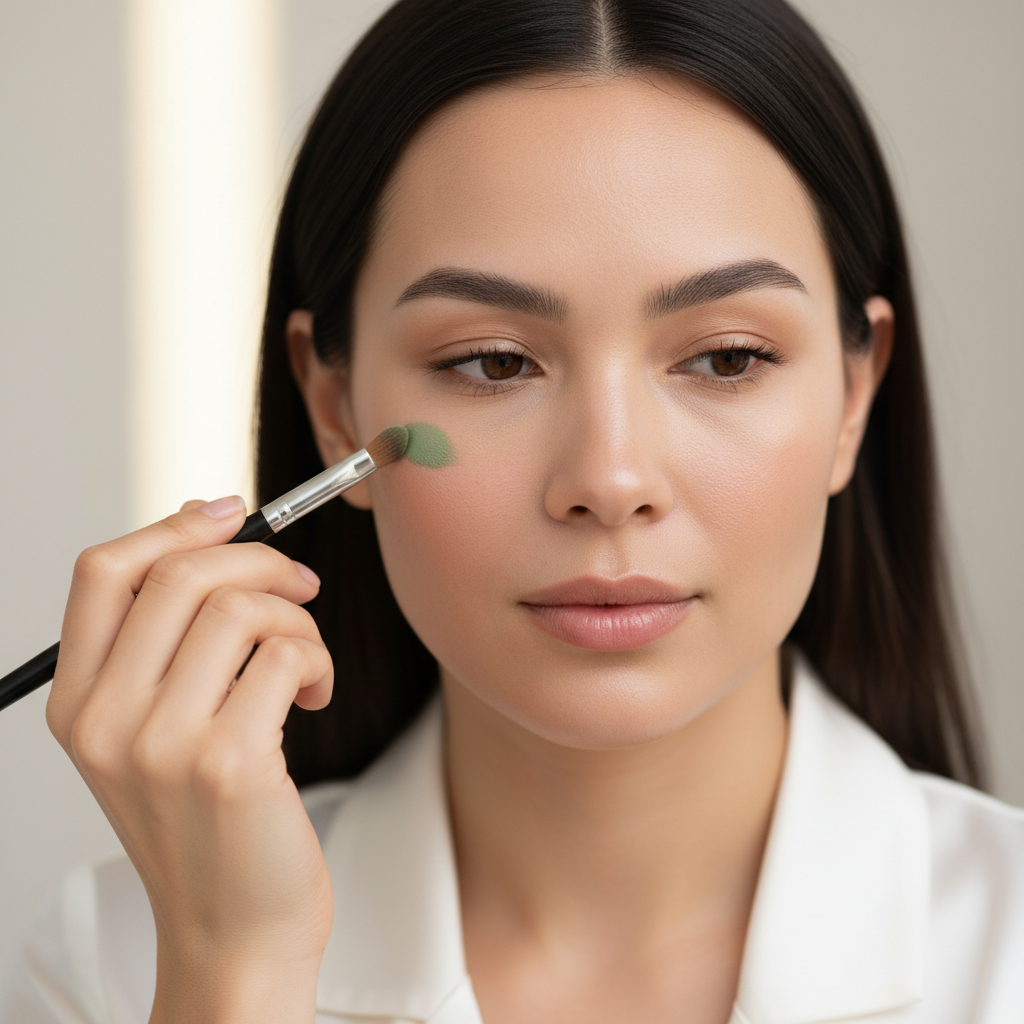
Green sits directly opposite red on the color wheel, which makes it the single most effective shade for cancelling out rosacea, blemishes, broken capillaries, and general flushing.
When working with color correction makeup, the golden rule is less is more. Pat a sheer layer of green corrector only onto the red areas — usually around the nose, on the chin, and across the cheeks — using a small synthetic brush or your fingertip.
Avoid sweeping it across the entire face. A thin, targeted application disappears completely under foundation, while a heavy layer can leave a grey, ashy cast that ruins your flawless makeup base before you have even started.
Outfit & Styling Guide
- Pair this fresh, neutralized complexion with a crisp white silk blouse — it reflects light onto the face and keeps redness from being re-emphasized
- Choose silver or pearl jewelry to keep the overall look cool and clean
- Avoid red or burgundy tops near the face on high-redness days, as they amplify any flush that peeks through
- A soft rosy-nude lip balances the look without competing with corrected skin
Use Peach or Orange to Erase Dark Under-Eye Circles

Blue and purple under-eye circles are best cancelled by their color-wheel opposites: peach for fair to light skin, and deeper orange for medium tones.
Warm the product on the back of your hand first, then press it into the inner corner and along the darkest part of the hollow using your ring finger. The gentle tapping motion melts the corrector into skin without dragging the delicate eye area.
This is one of the most transformative correcting makeup techniques because it instantly makes you look rested — even after a five-hour night.
Outfit & Styling Guide
- A cozy beige or camel knit sweater complements the warm peach tones beautifully
- Gold-toned earrings echo the warmth of the corrector and brighten the face
- Sweep hair away from the face in a low ponytail to show off the refreshed under-eye area
- Keep eye makeup minimal — a coat of brown mascara is enough when the under-eyes look this bright
Brighten Dull, Sallow Skin With Lavender

If your complexion looks tired, yellowish, or simply flat, lavender is your secret weapon. Purple neutralizes yellow undertones and instantly restores a healthy, luminous quality to the skin.
Apply a whisper-thin veil of lavender corrector to the center of the forehead, the tops of the cheekbones, and the chin — the areas where dullness shows first. Blend with a damp beauty sponge using light bouncing motions.
This makeup color correcting step is especially flattering in photos, where sallow tones tend to be exaggerated by flash and indoor lighting.
Outfit & Styling Guide
- Lean into the cool brightness with a soft lilac or lavender satin blouse
- Delicate gold hoops add warmth so the look never reads icy
- A glossy, glass-skin finish pairs perfectly — skip heavy powder everywhere except the T-zone
- Cool-toned pink blush on the apples of the cheeks completes the luminous effect
Deep Skin Tones: Reach for Red or Red-Orange
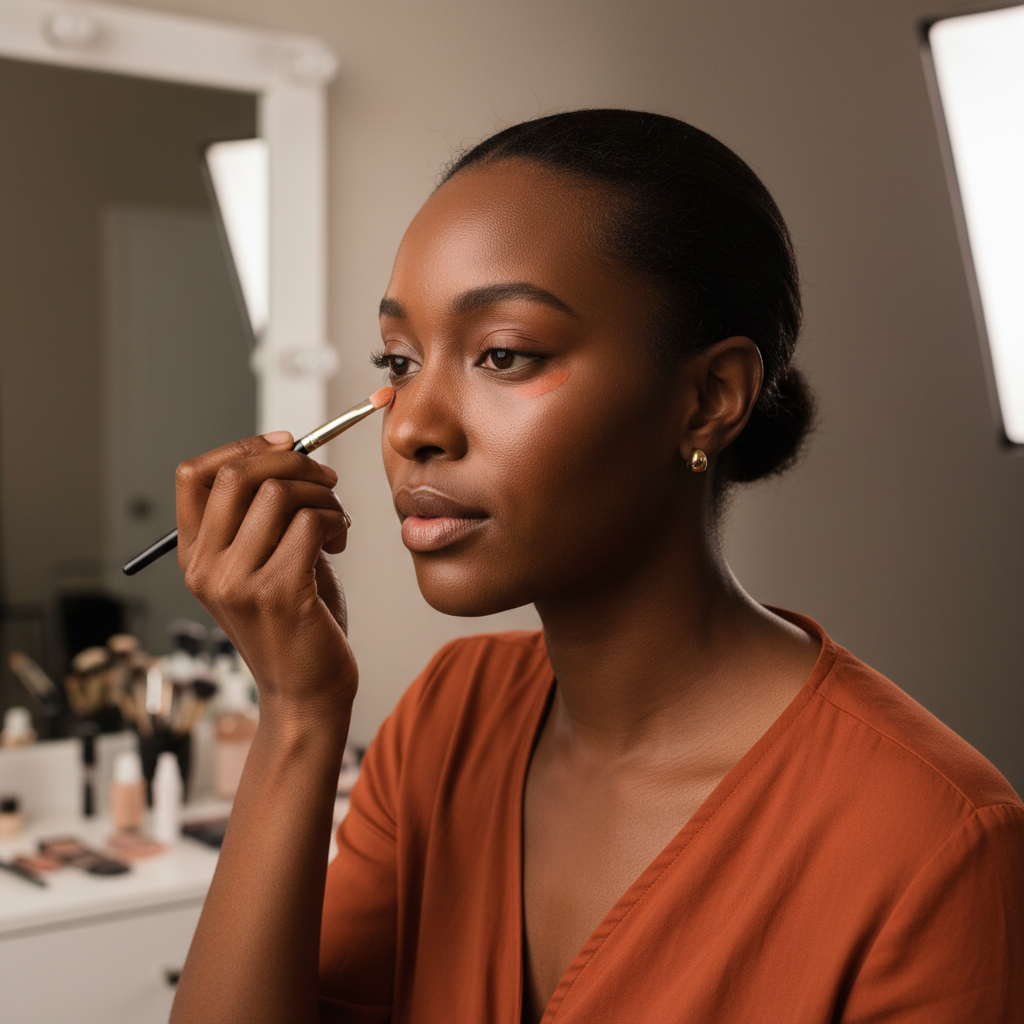
Peach correctors often look chalky on rich, deep complexions. Instead, a true red or red-orange corrector is the professional choice for cancelling deep blue-toned hyperpigmentation and under-eye shadows.
Some makeup artists even use a creamy red lipstick in a pinch — the pigment works exactly the same way. Apply sparingly to dark areas, blend the edges, and follow with your usual concealer.
Mastering this shade-matching principle is the foundation of all correcting makeup techniques: the deeper the discoloration and the skin tone, the warmer and deeper your corrector should be.
Outfit & Styling Guide
- A rust or burnt-orange wrap top harmonizes gorgeously with warm-corrected deep skin
- Small gold studs or thin gold chains enhance the natural glow
- Choose a satin-finish foundation rather than full matte to let the corrected skin look like real skin
- A terracotta lip ties the warm color story together
Cancel Purple Shadows and Bruise Tones With Yellow

Yellow corrector is the unsung hero of makeup color correcting. It neutralizes purple and violet tones — think bruising, deep veins at the temples, and the purplish shadows that can appear around the mouth on olive skin.
Yellow also doubles as a subtle brightener, making it ideal for olive and golden complexions that turn grey under standard concealers.
Press it onto the discolored area with a fingertip, give it thirty seconds to settle, then layer foundation gently on top so you do not wipe away the work underneath.
Outfit & Styling Guide
- A mustard or golden-yellow blouse plays up the sunshine effect of yellow-corrected skin
- Layered delicate necklaces draw the eye to the brightened lower face
- Golden-hour inspired bronzer on the high points of the face mirrors the warm correction
- Keep nails neutral or gold-toned for a cohesive warm palette
Wake Up Tired Eyes With Pink and Salmon

For fair, cool-toned skin, salmon and pink correctors do double duty: they cancel mild blue circles while adding an instant lit-from-within radiance.
Unlike heavier orange shades, pink correctors rarely look obvious on porcelain skin, which makes them perfect for everyday wear and no-foundation days.
Dot the product in a triangle shape under each eye, blend with a damp sponge, and you have an effortless flawless makeup base in under a minute.
Outfit & Styling Guide
- A blush-pink ribbed top mirrors the rosy correction for a fresh, monochromatic morning look
- Pull hair into a loose, undone bun to enhance the just-woke-up-like-this effect
- Cream blush in a matching pink keeps the complexion cohesive
- Skip eyeliner — curled lashes and brushed-up brows let the brightened eyes do the talking
Blend With a Damp Sponge, Never Rub
How you blend matters just as much as which shade you choose. Rubbing or swiping color correction makeup smears it out of place and lifts the pigment off the exact spot that needs it.
Instead, use a damp beauty sponge and press the product into the skin with quick, light bouncing motions. The dampness sheers out the corrector so it melts seamlessly into the skin rather than sitting on top of it.
Professional artists treat correcting as a stippling job, not a painting job — and it is the reason their clients’ skin looks airbrushed in real life, not just in photos.
Outfit & Styling Guide
- A black off-the-shoulder top is a makeup-artist favorite — it frames the face and never clashes with any correction shade
- Slick hair back into a clean bun so nothing touches the freshly blended base
- Keep accessories matte black or minimal silver for a backstage-chic vibe
- A clear brow gel and lip oil finish the editorial, skin-first look
Layer Foundation Thinly Over Your Corrections

Once your corrections are in place, the biggest mistake is burying them under a thick coat of foundation. Heavy layers shift the corrector, crease into fine lines, and undo all your careful work.
Apply foundation in thin layers with a dense brush or sponge, pressing rather than wiping over corrected areas. Build coverage only where you still see discoloration peeking through.
This layering discipline is what separates a cakey face from a genuinely flawless makeup base — skin that looks like skin, only better, at every age.
Outfit & Styling Guide
- A cream blazer over a white camisole gives timeless polish that matches refined, skin-like makeup
- Pearl earrings add a soft glow near the jawline and complement mature, luminous skin
- Choose a hydrating, medium-coverage foundation rather than full matte for natural movement
- A swipe of rosewood lipstick keeps the palette elegant and age-flattering
Set Strategically With Translucent Powder
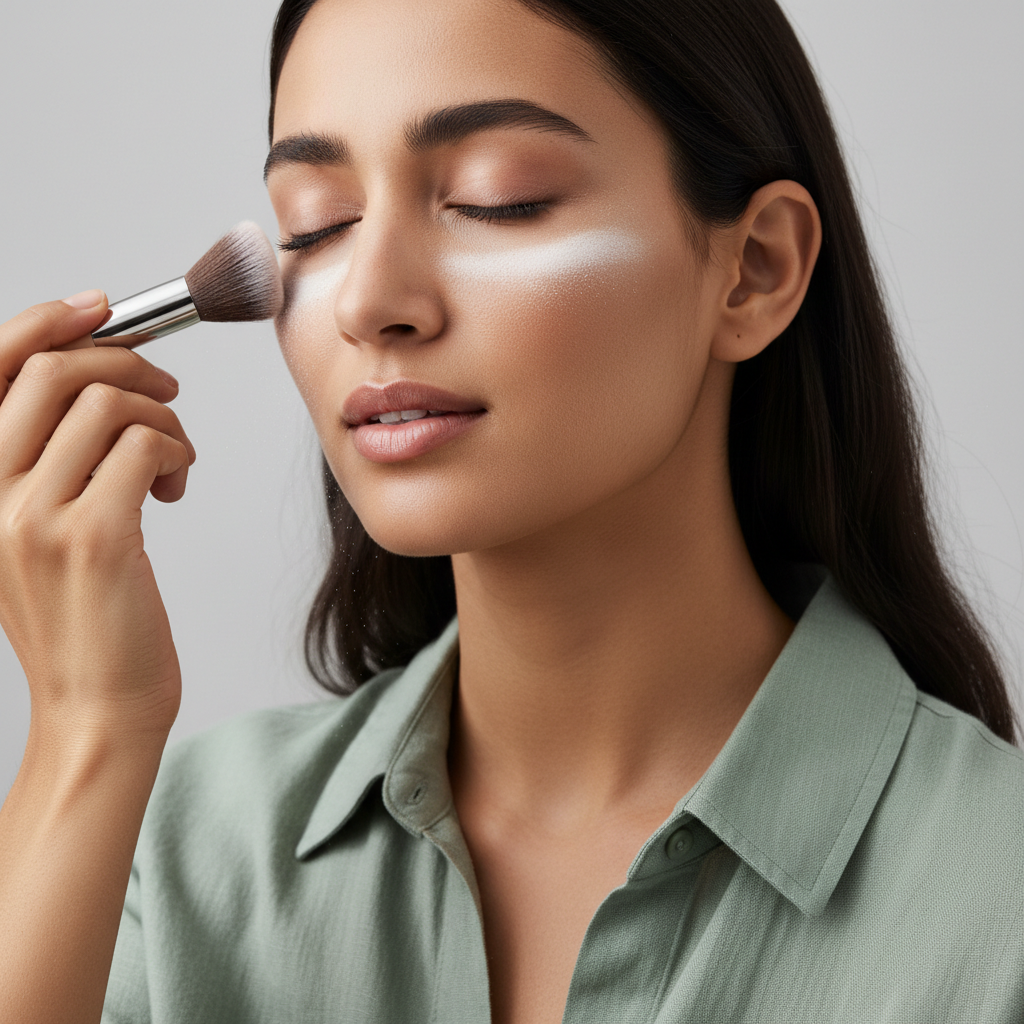
Color correction makeup is built in layers of cream product, and cream needs an anchor. A light dusting of finely milled translucent powder locks everything in place for hours.
Use a small, fluffy brush and press the powder only where corrections live — under the eyes, around the nose, on the chin. Leave the rest of the face dewy so the complexion keeps its natural dimension.
Setting strategically rather than powdering everywhere is one of the simplest correcting makeup techniques for keeping your base crease-free from morning meetings to evening plans.
Outfit & Styling Guide
- A sage-green linen shirt feels fresh and natural, echoing the soft-matte-meets-dewy skin finish
- Minimal stud earrings keep attention on the smooth, even complexion
- Brush brows up with clear gel for a polished but effortless frame
- Carry a compact of the same translucent powder for one midday touch-up — nothing more
Build a Routine, Not a Mask

The final tip is a mindset: color correcting should solve specific problems, not coat the whole face. Audit your skin in natural light, identify two or three areas of true discoloration, and correct only those.
On great skin days you may need nothing but a dab of peach under the eyes. On stressed-skin days, you might call in green, peach, and lavender together. Let your skin decide.
When makeup color correcting becomes a thoughtful, targeted ritual, the result is a complexion so even that people compliment your skin — never your makeup.
Outfit & Styling Guide
- A champagne satin slip dress celebrates the finished, glowing complexion for evenings out
- A thin gold necklace and soft waves keep the styling romantic and light
- Choose a nude-pink lip and subtle champagne highlighter to spotlight the even skin
- Store correctors in a single palette on your vanity so the routine stays quick and intentional
Final Thoughts
Color correction makeup is not about owning every shade in the rainbow — it is about understanding which two or three colors your skin actually needs.
Start with one corrector that targets your most stubborn concern, practice the press-and-blend technique, and layer foundation thinly on top.
Within a week, these correcting makeup techniques will feel like second nature, and your flawless makeup base will take minutes, not hours.
Because the best compliment in beauty is never “great makeup” — it is “your skin looks incredible.”